




Content
Some well-known centralized exchanges include https://www.xcritical.com/ Coinbase, Binance, and Kraken. These platforms are popular due to their ease of use, extensive asset offerings, and beginner-friendly features. With incidents like the FTX collapse and the Sushiswap exit scam, centralized and decentralized platforms have vulnerabilities.
Beginner’s Guide to Trading Crypto
CEXs are managed by a central authority, while DEXs operate on blockchain networks without intermediaries. Discover the key differences between fiat and commodity money, their advantages, limitations, and how they are used in Initial exchange offering global economies. MoonPay also makes it easy to sell crypto when you decide it’s time to cash out. Simply enter the amount of the token you’d like to sell and enter the details where you want to receive your funds.
Do you pay taxes on a decentralized exchange?

The rise of aggregators actually means that users can access liquidity from DEXs and CEXs at dex vs cex the same time. The protocol DiversiFi, which is itself a DEX, aggregates liquidity from both kinds of exchanges in order to help its users conclude larger trades more efficiently. This helps investors to avoid the costs that come with an exchange’s liquidity proving too small for their order.
Do I Need To Provide Personal Information To Trade On A Dex?
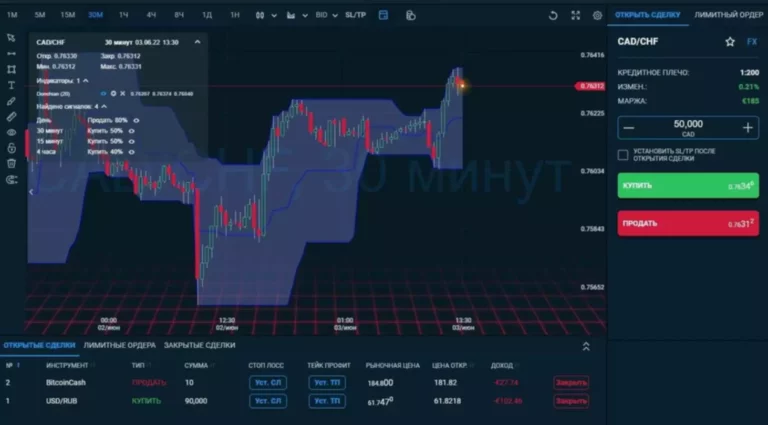
When choosing a cryptocurrency exchange, investors have a lot of things to consider. Security, liquidity, ease of use, and fees are all important criteria. Ergo offers a series of unique features that set it apart from other blockchain platforms. (-) The non-custodial nature of a DEX means that a user can lose their funds permanently if they do not keep their private keys secure. There is no way to recover the seed phrase for a unique wallet, so in the event, a user loses or forgets their private keys, there is no way to retrieve them.
- It is an excellent milestone, considering the cryptos are just over a decade old.
- Almost every — if not every — service you use on a CEX will incur a transaction fee.
- It helps to improve the credibility and trust among the users toward the platform.
- A CEX works similarly to what you’d find in the world of stocks — a single entity operates using an order book in which market makers and takers place orders.
- With new decentralized finance platforms across different blockchains, crypto holders may be wondering what are the differences between a DEX and a CEX?
- Centralized exchanges often offer off-ramping to fiat currency, while many decentralized exchanges do not offer this feature.
What Are Centralized and Decentralized Exchanges?
CEXs often charge higher fees than DEXs, with fees ranging from 0.1% to 0.5% per trade. Additionally, CEXs may charge additional fees for depositing, withdrawing, or trading certain currencies. In contrast, DEXs often have lower fees, with some platforms offering zero trading fees, but they may charge network fees for transactions.
The order book then matches buyers with sellers, taking a small cut of the transaction as a fee. Another factor to consider is transaction fees, where DEXs often have lower fees than CEXs. However, this is not always the case, and some DEXs might have higher network fees, making it more expensive to trade crypto.
Similar to traditional finance (TradFi) stock exchanges, CEXs are usually subject to government regulations and licensing requirements. To open an account with a CEX, users are required to undergo KYC (Know Your Customer) and AML (anti-money laundering) procedures. When a matching buy and sell order is found, the trade is executed, and the corresponding cryptocurrencies and funds change hands within the exchange’s internal ledger. MSc in Computer Science, BSc in Smart Engineering, and BSc in Economics and Statistics.Michael has been active in the crypto community since 2017. In the sections that follow, we will compare the fees of the most popular crypto exchanges to determine whether or not this is indeed true. The extended Unspent Transaction Output (eUTXO) model used by Ergo and a small number of other smart contract blockchain platforms…
If you want to use a decentralized exchange, you need to already have a cryptocurrency wallet, as well as some funds within it. Then, you need to be able to find the coins or tokens that you’re looking to trade, verify their contract address, and so on. On the other hand, decentralized platforms like Uniswap provide enhanced privacy, control over assets, and transparent, trustless trading experiences. But to use them well, you need to be well-versed in the intricacies of blockchain and wallet security. It acts as an intermediary to facilitate the trading of cryptocurrencies, managing users’ funds, maintaining the order book, and executing trades on behalf of the users.
However, these blockchain fee requirements can evolve through the implementation of sidechains that address scalability issues. For example, the gas fees on Ethereum can be extremely expensive, whereas on Ergo they are quite low in comparison. Platforms like Quantum Flash provide tools and insights to optimize trading strategies across both centralized and decentralized exchanges.
Learn all about meme coins like Dogecoin (DOGE), their risks, how they work, and how to avoid common meme coin scams. To get started, simply buy cryptocurrency via MoonPay using your credit card or any other preferred payment method. According to data from Dune and The Block, CEXs have consistently handled the majority of spot trading volume. The largest percentage of spot trade volume performed via DEXs peaked at just above 21% in May 2023, with most of the volume hovering between 5% and 15% when compared to CEXs. Although DEXs are growing in popularity, one can’t deny that CEXs still dominate them in terms of the trading volume. When using a DEX, there’s no need to supply personal, identifying information and trust it to be stored securely.
Centralized exchanges like Paybis offer high liquidity and user-friendly interfaces and are subject to regulatory frameworks. A decentralized exchange, or DEX, is a peer-to-peer marketplace that allows users to trade trustlessly. Overall, there are advantages to using a CEX and a DEX, and many users use both depending on their specific needs. DEXs become much more useful when a user is participating in a specific cryptocurrency ecosystem and wants to purchase native assets.
(-) Since data is transparent, though, transactions can be tracked, and wallets can be easily detected. This scenario is not ideal, but a dApp like ErgoMixer provides users with a new layer of security by hiding some of the transactions on-chain. Below is a quick snapshot of the differences between a centralized and decentralized exchange. Decentralized Exchange (DEX) is a term exclusive to the crypto space. As the name suggests, DEX operates as a decentralized network and isn’t owned by a single entity or authority. It is a peer-to-peer marketplace to trade or exchange cryptocurrencies without the help of any intermediary.
Learn what crypto faucets are, how they function, and how you can earn small amounts of cryptocurrency without any financial investment. Learn how to track XRP transactions, check balances, access developer tools, and explore the XRPL ecosystem. Learn all about PayPal USD (PYUSD), the stablecoin built for seamless transactions and cross-border payments on the PayPal platform and beyond.
As a newbie/established trader, it’s crucial to consider these alarming incidents. In addition, many crypto exchanges offer other functions you need to pay for. Another example is liquidation fees when your collateral needs to be liquidated. A DEX allows crypto traders to swap coins and tokens without a middleman.

